
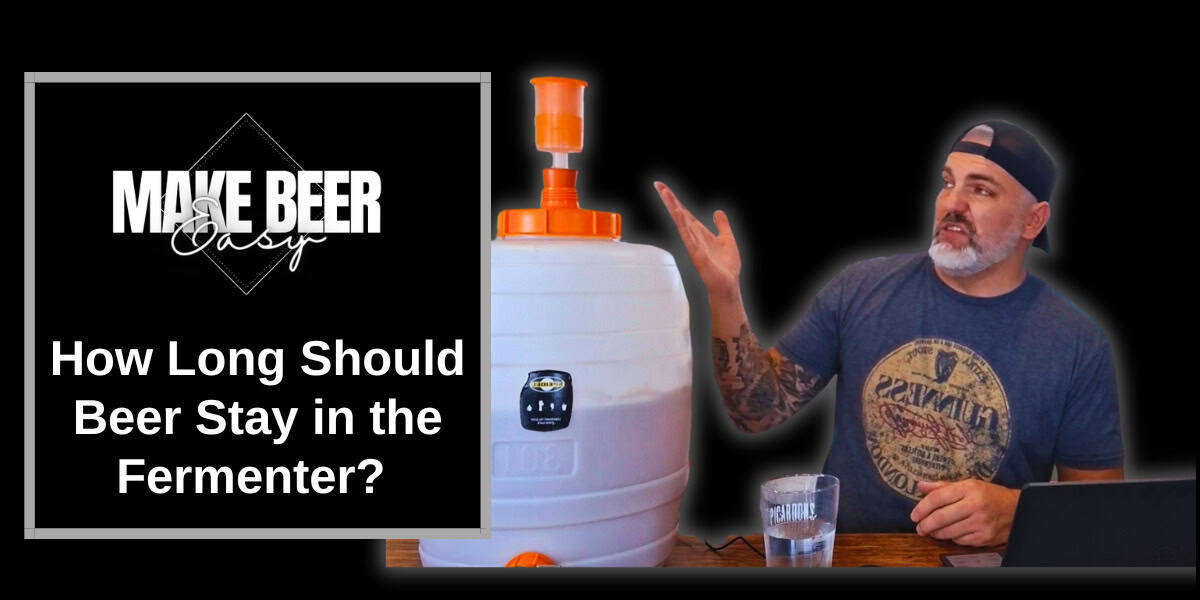
One of the most common ways beginner homebrewers ruin perfectly good beer is by taking it out of the fermenter too early. So how long should beer stay in the fermenter?
If you’ve ever stared at your airlock, watched the bubbling slow down, and thought something went wrong, you’re not alone. This is where a lot of new brewers panic and make decisions that hurt their beer.
In this guide, I’ll walk you through how long beer actually needs to stay in the fermenter, what’s really happening during fermentation, and why rushing the process causes problems, especially for beginners.
Watch the Video: When Fermentation Is Actually Done
In the video below, I walk through this exact topic using a real batch that’s sitting at day 10 in the fermenter and explain why that beer is exactly where it should be
.
The Biggest Beginner Mistake: Pulling Beer Too Early
Most beginners believe fermentation is finished when the airlock stops bubbling. That’s not how fermentation works.
Yes, bubbling means yeast is active. But when bubbling slows or stops, it does not mean fermentation is complete.
What usually happens is this:
-
Brew day goes well
-
Beer goes into the fermenter
-
Airlock starts bubbling and everyone gets excited
-
After 4 to 6 days, bubbling slows or stops
-
Panic sets in
This stage is completely normal.
What Fermentation Actually Is (In Simple Terms)
Fermentation is not just yeast making alcohol and CO₂. That’s only part of the process.
Here’s what yeast really does:
-
Converts sugars into alcohol
-
Produces CO₂ (the bubbling you see)
-
Cleans up off-flavors it created earlier
-
Helps clarify and condition the beer
If you rush fermentation, you interrupt that cleanup phase, and that’s when beer starts tasting harsh, rough, or “homebrew-ish.”
Why Airlock Activity Is Misleading
Airlocks are useful, but they don’t tell the full story.
Lack of bubbling does not mean:
-
Yeast died
-
Beer is ruined
It usually means the most aggressive phase is finished and the yeast has moved into cleanup and conditioning.
For beginners, this is one of the hardest things to accept.
A Simple Day-by-Day Fermentation Timeline (Beginner-Friendly)
Day 0 to 1: Yeast Wakes Up
-
Yeast absorbs oxygen
-
Yeast multiplies
-
Little or no visible activity
-
No bubbles does not mean failure
This is where many beginners panic unnecessarily.
Day 1 to 4: Active Fermentation
-
Yeast aggressively converts sugars to alcohol
-
CO₂ production increases
-
Krausen forms
-
Heat is generated
-
Most alcohol is created here
Beer is still rough and unfinished at this stage.
Day 4 to 7: Cleanup Phase
-
Airlock activity slows
-
Yeast begins cleaning up byproducts
-
Off-flavors start to reduce
-
Panic often sets in for beginners
This phase is critical for better-tasting beer.
Day 7 to 10: Conditioning
-
Yeast continues cleanup
-
Proteins and yeast begin settling out
-
Beer becomes smoother and clearer
Patience here pays off.
Day 10 to 14: Maturation
-
Final cleanup finishes
-
Harsh flavors fade
-
Beer stabilizes
-
Clarity improves
Nothing bad is happening here. Beer does not spoil during this time when fermented properly with good yeast.
How Long Should Beginners Leave Beer in the Fermenter?
Here’s the Make Beer Easy rule of thumb:
-
Most beers: 10 to 14 days minimum
-
Ideal for beginners: 14 days
-
Beer kits: Up to 3 weeks
-
Shorter than 10 days: Rarely recommended
You do not need to constantly test gravity. I don’t.
I let the beer sit, then check gravity once at the end. That’s it.
Simple. Less stress. Better beer.
Why Rushing Fermentation Hurts Your Beer
Taking beer out too early can cause:
-
Green apple flavors
-
Harsh alcohol bite
-
Cloudy beer
-
“Homebrew twang”
You’ll still get alcohol, but the beer won’t be as good as it could be.
Letting yeast finish its job is one of the easiest ways to improve your beer as a beginner.
The Most Important Beginner Advice
If you’re staring at your fermenter wondering if something is wrong, most of the time nothing is wrong.
Beer takes time.
That’s it.
Cheers, Big Robb
Simple Brewing, Better Beer!
P.S.
Want Simple, Proven Beer Recipes?
If you want no-nonsense brewing advice and recipes that actually work, you’re in the right place.
When you sign up using the newsletter form on the side of this page, I’ll send you my Top 5 Best-Selling Brew Pub Beer Recipes as a gift.
These are recipes to the beers I sold when I owned a brew pub. They’re written to be simple, repeatable, and beginner-friendly, with no overcomplication.
Just drop your email in the signup box and I’ll send them your way.