
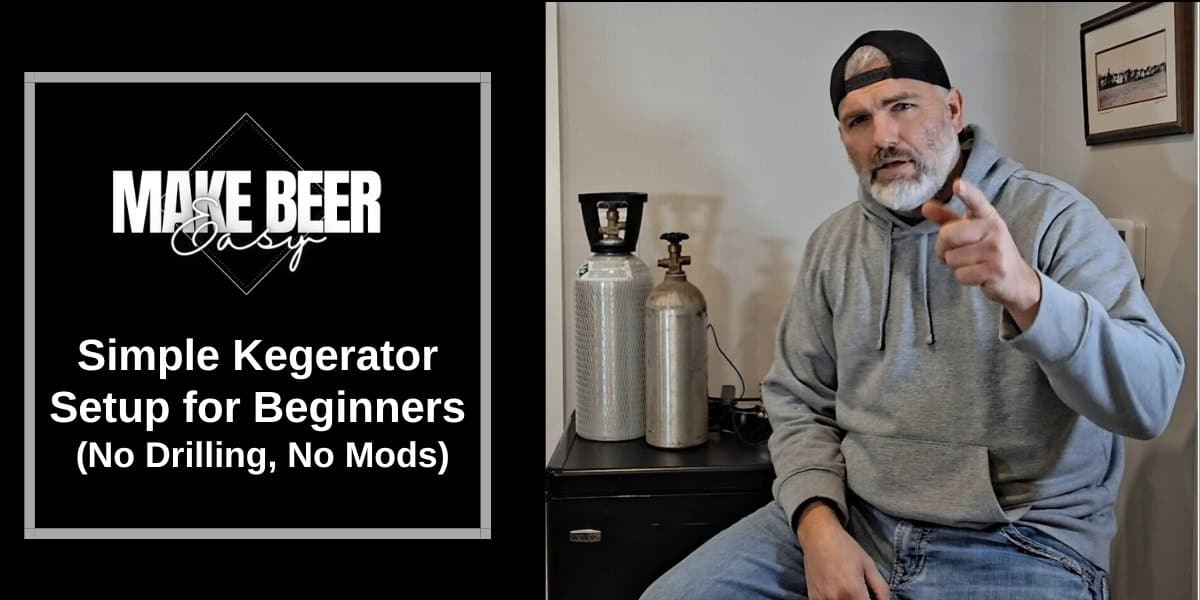
If kegging beer sounds complicated or expensive, it really doesn’t have to be. This simple keggerator setup is perfect for beginner homebrewers who want to move away from bottling without drilling holes, modifying equipment, or buying an expensive commercial kegerator.
This is the exact beginner kegerator setup I use at home. It’s affordable, easy to set up, and it doubles as a cold-crash fridge for clearer beer. If you’re new to kegging or just want a simple way to serve homebrew, this setup works.
Below is the equipment you’ll need to build a basic kegerator using a chest freezer.
Watch the Full Video: Simple Kegerator Setup for Beginners
If you prefer to see this setup step by step, I walk through the entire keggerator build in the video below — including the freezer, Inkbird setup, CO₂ options, and how I use this for cold crashing as well.
👇 Watch the full video here:
This is the exact setup I’m using right now, and it’s one of the simplest ways to start kegging without drilling holes or buying an expensive kegerator.
Equipment You’ll Need
Chest Freezer (Danby or Similar Size)
A small chest freezer is the foundation of this beginner keggerator setup. I use a Danby chest freezer, which comfortably fits two corny kegs and a CO₂ tank (either 5lb or 10lb) while still being compact and affordable.
You don’t need a full-size kegerator or refrigerator to start kegging beer at home. Any similar-sized chest freezer will work just fine for beginners.
👉 Check current prices on small chest freezers suitable for kegging
Inkbird Temperature Controller
A chest freezer on its own is too cold for beer, which is why a temperature controller is essential.
I use an Inkbird temperature controller to convert the freezer into a kegerator by keeping it at standard fridge temperatures. You simply plug the freezer into the Inkbird, set your desired temperature, and the controller automatically turns the freezer on and off.
This is what allows you to safely carbonate, serve, and cold crash beer without freezing it.
👉 See the Inkbird temperature controller I use for kegging and cold crashing
Corny Kegs (Ball Lock Kegs)
To keg beer, you’ll need corny kegs, also known as ball-lock soda kegs.
These stainless steel kegs were originally used by soda companies and are ideal for homebrewing. They’re durable, easy to clean, and designed to work perfectly with beginner kegging systems like this one.
Most chest freezer keggerators are built around standard 5-gallon corny kegs, making them a great long-term investment even if you upgrade later.
👉 See available corny kegs for homebrew kegging
Picnic Tap with Beer Line
Instead of drilling holes or installing faucets, I recommend starting with a picnic tap and beer line.
This keeps the keggerator setup simple, flexible, and beginner-friendly. While it doesn’t look as fancy as a tower or faucet, it pours beer perfectly and allows you to start kegging without permanent modifications.
👉View beginner-friendly picnic taps with beer line
CO₂ Tank (5 lb or 10 lb)
You’ll need a CO₂ tank to carbonate and dispense your beer.
A 5-lb CO₂ tank is ideal for tight spaces or smaller setups, while a 10-lb tank lasts longer and still fits inside most chest freezer keggerators. Both sizes work well for beginners.
👉 Check availability of 5 lb CO₂ tanks for homebrew kegging
👉 Check availability of 10 lb CO₂ tanks for homebrew kegging
Why This Kegerator Setup Works for Beginners
This beginner keggerator setup keeps everything simple and affordable:
-
No drilling or permanent modifications
-
Uses a standard chest freezer
-
Works for both serving and cold crashing beer
-
Easy to upgrade later if you want taps or a tower
If you’re switching from bottling to kegging, this setup removes most of the complexity and lets you focus on making better beer.
What’s Next
In upcoming videos and posts, I’ll show you:
-
How to clean a corny keg the easy way
-
How to transfer beer from the fermenter into the keg
-
How to carbonate beer using this setup
If you want more beginner-friendly homebrewing tips, make sure you’re subscribed on YouTube and check back here for new guides.
Want Better Beer Without Overcomplicating It?
If you want to make beer that actually tastes like something you’d order at the pub, I’ve put together my Top 5 best-selling beer recipes from my brew pub.
These are proven, repeatable recipes I’ve brewed and served for years — no gimmicks, no weird ingredients, just solid beer that works.
👉 Sign up to Get the Top 5 Brew Pub Beer Recipes on side of blog.
I’ll also send you simple brewing tips from time to time to help you make better beer with less stress.