
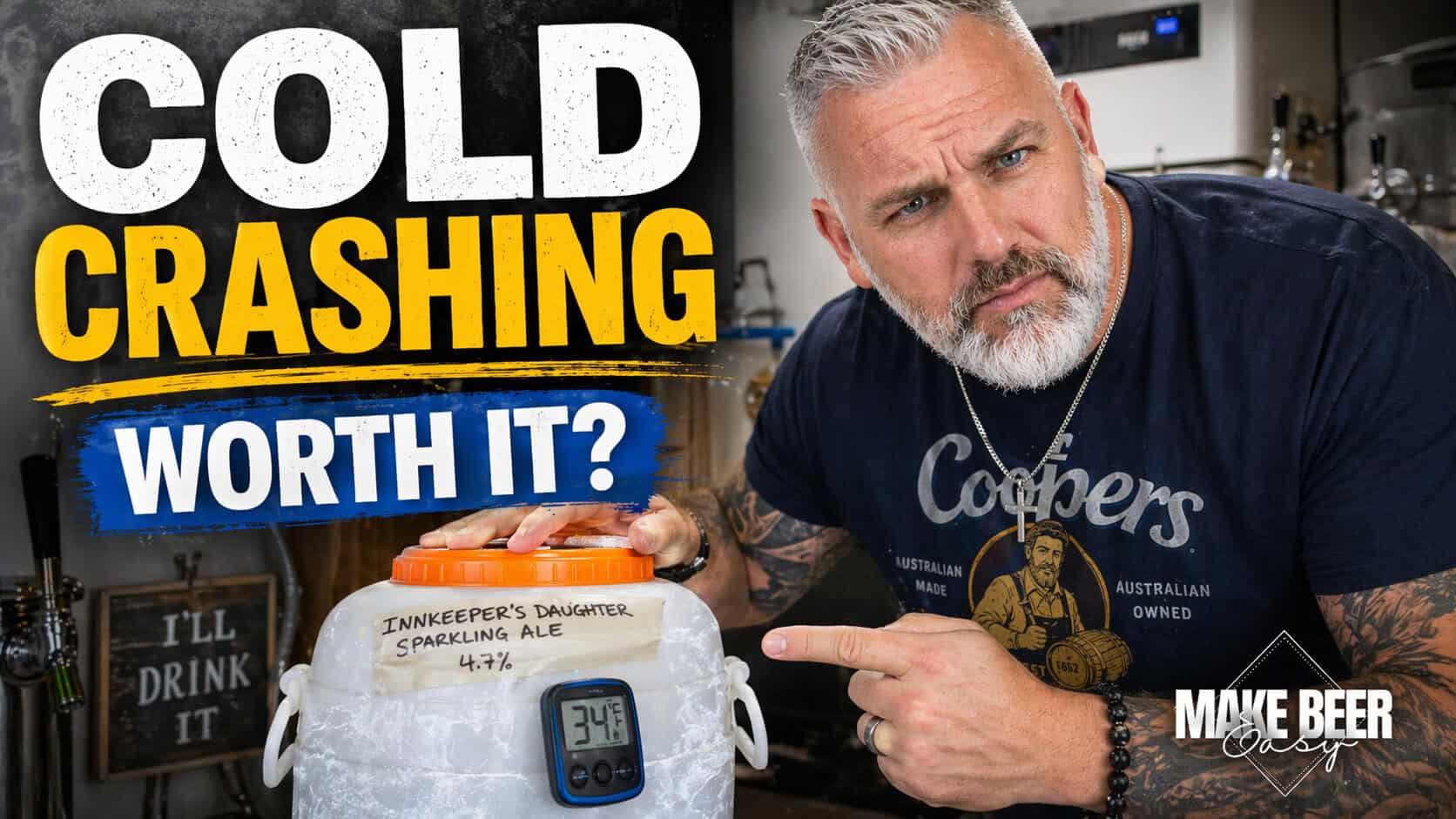
If your beer kit is cloudy, tastes rough, or just doesn’t seem to have that clean finished beer look, cold crashing might be the missing step.
Most beginner brewers skip it.
They ferment, bottle or keg, and hope for the best.
But cold crashing can make a huge difference—especially with beer kits like the Thomas Coopers Innkeeper’s Daughter Sparkling Ale.
In this batch, after dealing with a slow and frustrating fermentation, it was finally time to cold crash and see if it would help clean things up before kegging.
And honestly?
This is one of those simple steps that can seriously improve your homebrew.
Watch Full Cold Crashing Video Here
What Is Cold Crashing?
Cold crashing is exactly what it sounds like.
You take your fermenter and drop the temperature as close to fridge temperature as possible—usually around 34–40°F (1–4°C)—for 24 to 72 hours.
This causes:
- yeast to drop out
- hop particles and protein haze to settle
- suspended junk to compact at the bottom
- clearer beer going into bottles or kegs
Basically, it helps your beer look and taste more finished.
If you’ve ever wondered why your beer stays cloudy, this is one of the first things to check.
If you’re struggling with cloudy beer, check out my full guide on how to clear homebrew beer.
🍺 New to Homebrewing? 🍺
Don’t make the beginner mistakes that ruin batches.
I put together a free Beginner Brewing Bootcamp that walks you through the biggest mistakes new brewers make and exactly how to avoid them.
Get it free here: Beginner Brewing Bootcamp
Why I Cold Crashed This Coopers Beer Kit
This wasn’t a perfect fermentation.
This Thomas Coopers Innkeeper’s Daughter Sparkling Ale had some fermentation issues early on, and I had to work through a bit of a stuck fermentation before getting it back on track.
That’s actually pretty common with beginner beer kits.
If fermentation slows too early, yeast can stay suspended longer and leave the beer tasting rougher than it should.
That’s why cold crashing made even more sense here.
Before kegging, I wanted:
- cleaner beer
- less sediment
- better clarity
- smoother flavor
- less junk getting pulled into the keg
If you’ve ever dealt with stalled fermentation, read this guide on how to fix a stuck fermentation.
The Process I Use
Nothing fancy here.
Once fermentation is fully complete—and I mean confirmed with a stable hydrometer reading, not just “the airlock stopped bubbling”—I move the fermenter somewhere cold.
That could be:
- a fridge
- a cold garage (if temps cooperate)
- a temperature-controlled chamber
- a keezer setup
I usually leave it for about 48 hours.
That gives enough time for the yeast and sediment to really compact at the bottom.
And yes—the hydrometer matters.
Airlocks lie.
Hydrometers tell the truth.
If you’re still learning how to use one, here’s my guide on how to use a hydrometer for homebrewing.
Does Cold Crashing Improve Flavor?
Yes—but not because it magically changes the beer.
It improves flavor by removing suspended yeast and trub that can create:
- harsh flavors
- yeasty taste
- muddy mouthfeel
- rough finish
Especially in beer kits, that extra cleanup step can make a noticeable difference.
The beer tastes cleaner.
More polished.
More like actual beer and less like “almost beer.”
🍺 Want Better Beer Recipes? 🍺
One of the fastest ways to improve your brewing is starting with proven recipes.
I put together my Top 5 Best-Selling Brew Pub Recipes—the recipes customers kept coming back for again and again.
Grab them free here: Top 5 Best-Selling Brew Pub Recipes
Is It Necessary?
No.
But I think more beginner brewers should do it.
Especially if you’re kegging.
If you bottle, it still helps.
If you keg, I’d argue it becomes even more valuable because you’re trying to transfer the cleanest beer possible without dragging half the fermenter into the keg.
For beginner brewers, it’s one of the easiest upgrades you can make.
Final Verdict – Worth It?
Absolutely.
Cold crashing is simple, cheap, and improves both clarity and drinkability.
For this Coopers Sparkling Ale, it was the obvious next step before kegging.
It helps the beer look better.
It helps the beer taste cleaner.
And it makes the final pour way more satisfying.
Most people skip it because they’re impatient.
Don’t be most people.
Let the beer finish properly.
Want Better Beer Every Time?
If you’re serious about making better homebrew without wasting batches, I’ve got two free resources for you.
Beginner Brewing Bootcamp
Learn the biggest mistakes beginner brewers make—and how to avoid them.
Get the free guide here: Beginner Brewing Bootcamp.
Top 5 Best-Selling Brew Pub Recipes
Want recipes that actually sell and people come back for?
Grab my top 5 best-selling brew pub recipes here: Top 5 Best-Selling Brew Pub Recipes.
Cheers, Big Robb is Out!
Make Beer Easy!
Simple brewing. Better beer. Made easy.